Best Baby Rompers for the Kenyan Climate — A Parent’s Guide

If you’ve ever stood in a baby shop holding two rompers — one thick, one thin — and had absolutely no idea which one to pick, you are not alone. It’s one of the most common questions we get at Toto’s Baby Shop: “Which rompers are actually right for Kenya?”
And it’s a great question, because Kenya is not a one-size-fits-all climate. A baby in Mombasa needs completely different clothes from a baby in Nakuru or Eldoret. Even within Nakuru, mornings can feel like a different country compared to afternoons.
So let’s break it down properly — what to look for, what fabrics to choose, and how to dress your little one comfortably no matter where in Kenya you are. 🇰🇪
👶 What Is a Baby Romper, Exactly?
A romper (also called an onesie or a babygrow) is an all-in-one outfit that covers your baby’s body and snaps at the bottom for easy nappy changes. They’re the most practical piece of clothing a newborn can own — no shirts riding up, no trousers falling down, and nappy changes without fully undressing your baby.
Most Kenyan parents stock up on rompers as the foundation of their baby’s wardrobe, and for good reason. They’re easy, comfortable, and — at Toto’s — very affordable.
🌤️ Understanding Kenya’s Climate Zones (and What They Mean for Baby Clothes)
Kenya has several distinct climate zones, and where you live should directly influence what rompers you buy.
The Coast — Mombasa, Malindi, Kilifi
Hot and humid year-round, with temperatures regularly hitting 30°C+. Babies here need the lightest, most breathable fabrics possible. Thick rompers will cause heat rash and discomfort. Single-layer cotton or muslin rompers are ideal.
The Highlands & Rift Valley — Nairobi, Nakuru, Eldoret, Nyeri
This is where it gets interesting. Nakuru, for example, sits at over 1,800 metres above sea level. Mornings and evenings can drop to 12–15°C, especially between June and August. Afternoons, however, can be warm and sunny. Babies here need layerable clothing — a light romper underneath with a cardigan or knitwear on top is the winning formula.
Western Kenya — Kisumu, Kakamega
Warm and humid but not as extreme as the coast. Medium-weight cotton rompers work well here year-round.
Arid & Semi-Arid Areas — Garissa, Turkana, Mandera
Very hot and dry. Lightweight, loose cotton rompers only. Avoid synthetic fabrics entirely.
🧵 What Fabrics to Look For (and What to Avoid)
The fabric of a romper matters far more than the design. Here’s your quick guide:
✅ Best Fabrics for Kenyan Babies
100% Cotton
The gold standard for baby clothing anywhere in the world, and especially in Kenya. Cotton is breathable, soft on delicate skin, absorbs moisture, and holds up well through repeated washing. If you only remember one thing from this article: buy cotton.
Muslin Cotton
An even lighter weave of cotton — perfect for the coast and for Kenya’s hottest months (January–March and July–August). Muslin rompers feel almost weightless on a baby.
Interlock Cotton (Double-Knit)
A slightly thicker, stretchy cotton that holds its shape well. Good for highlands babies, especially for evening wear. Soft inside and out.
Cotton Blend (Cotton/Spandex)
A small percentage of spandex (usually 5%) makes rompers easier to put on and take off without pulling. Fine for babies — the stretch helps without sacrificing breathability.
❌ Fabrics to Avoid
100% Polyester or Nylon — these trap heat and moisture against baby’s skin, leading to heat rash and discomfort. Fine for outer layers like rain jackets, but never as a base romper.
Heavily dyed fabrics with no certification — baby skin is sensitive. Look for rompers that are OEKO-TEX certified or labeled as using non-toxic dyes. At Toto’s, we stock rompers that meet this standard.
Rough or scratchy materials — if it feels scratchy to the back of your hand, imagine it on a newborn. Always feel the fabric before you buy.
👕 Types of Rompers and When to Use Them
Not all rompers are the same. Here’s what you’ll find in our infant rompers collection and when each type shines:
Short-Sleeve Rompers
Best for: Coastal Kenya, hot afternoons in the highlands, indoors with good airflow
How to use them in Nakuru: perfect for daytime wear from October to March. Layer with a light cardigan in the evening.
Long-Sleeve Rompers
Best for: Highlands and Rift Valley, June–August cold season, evenings and nights year-round
How to use them: these are your Nakuru night-time staple. Keep 3–4 in rotation for cooler months.
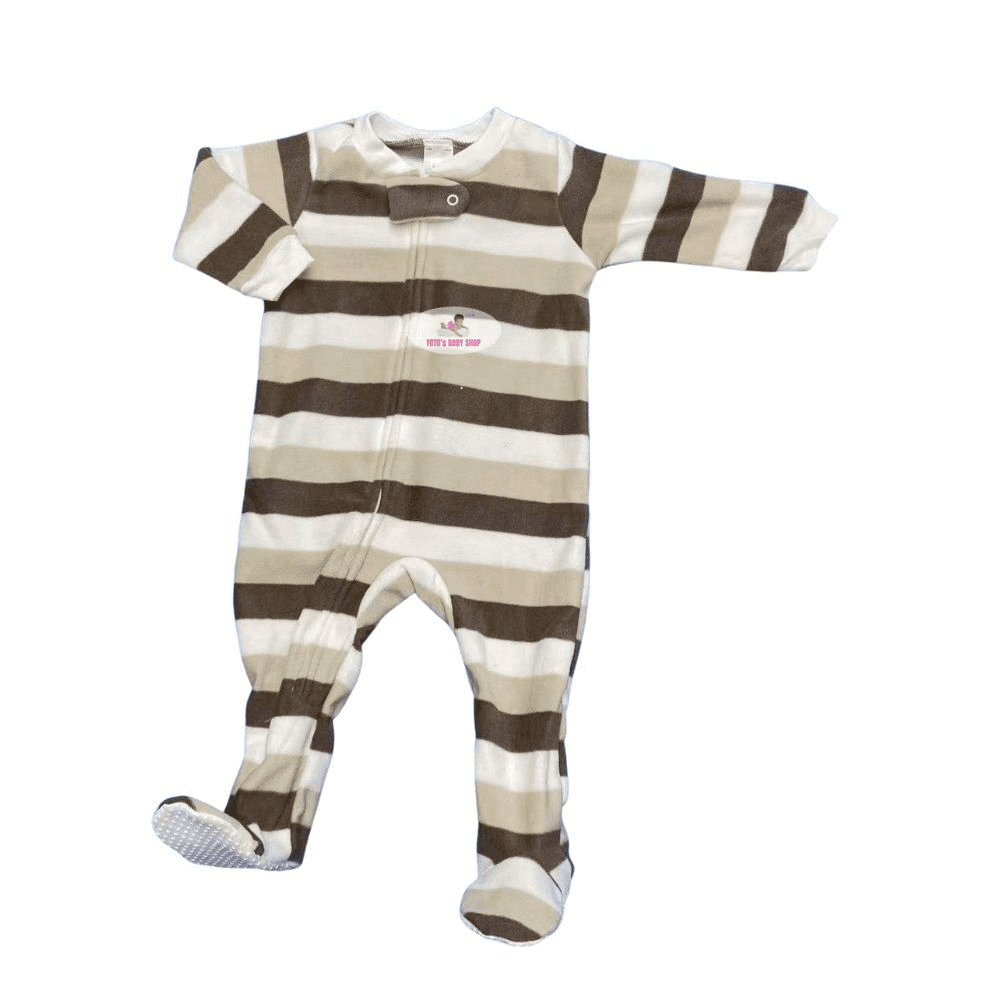
Sleepsuits / Footie Rompers
Best for: Nighttime sleeping across all Kenya regions
These have enclosed feet to keep toes warm and prevent socks from being kicked off (and they always get kicked off). A must-have for every Kenyan baby wardrobe, especially if you’re in the highlands.
Button-Down Rompers (Front Snap)
Best for: Newborns — easier to dress without pulling over a delicate head
The snaps at the bottom also make nappy changes much easier. Look for rompers with at least 3 poppers at the crotch.
Envelope Neck Rompers
These have a wide overlapping neck that can be pulled down the body rather than over the head — a brilliant design for newborns and for the inevitable nappy explosion moments (you’ll understand this soon enough 😅).
📏 Getting the Right Size — Don’t Make This Common Mistake
Here’s something most first-time parents get wrong: they buy too many newborn-size rompers. Babies outgrow the newborn size (0–3 months) in as little as 2–4 weeks. By the time you’ve washed and re-dressed them in that tiny romper three times, it no longer fits.
Our sizing recommendation:
- Newborn / 0–3 months — buy just 3–4 pieces. Enough to get through those early weeks.
- 3–6 months — buy 5–7 pieces. This is the sweet spot where babies stay the longest.
- 6–9 months and 9–12 months — buy 4–5 each. Babies grow fast but slightly slower at this stage.
Also note: Kenyan babies tend to be on the larger side at birth. If your baby is expected to be 3.5kg or above, skip the NB size entirely and start at 0–3 months.
🌈 Boys, Girls, or Unisex — Does It Matter?
Not really — at least not for comfort or warmth. The fabric and fit matter far more than the colour or print. That said, we stock rompers in all three categories at Toto’s to give you plenty of choice:
- Boys rompers — blues, greens, earthy tones, prints like trucks, animals, and geometric patterns
- Girls rompers — pinks, lilacs, florals, butterflies, and soft pastels
- Unisex rompers — whites, yellows, mint greens — great for baby showers when you don’t know the gender yet
🧺 Caring for Baby Rompers — Making Them Last
Good rompers, well cared for, can survive multiple children. Here’s how to keep them in great condition:
- Wash before first wear — always. Remove any manufacturing residue from the fabric.
- Use gentle, baby-safe detergent — avoid harsh detergents and fabric softeners in the first 6 months.
- Wash at 30–40°C — hot water causes cotton to shrink and colours to fade.
- Dry in the shade — direct sun bleaches colours and can make cotton stiff.
- Don’t iron over poppers/snaps — the plastic can melt. Iron the fabric panels only.
🏪 Shop Baby Rompers at Toto’s Baby Shop — Nakuru
Whether you’re dressing a newborn for their first week home or stocking up for a growing 6-month-old, we have the rompers for every Kenyan climate, every budget, and every style.
Visit us at Maombini Plaza, Kenyatta Avenue, Nakuru or shop our full infant and toddler range online. We deliver countrywide — so whether you’re in Nairobi, Kisumu, Eldoret, or anywhere in between, your baby’s new rompers are just a click away.
📞 Call or WhatsApp: +254 717 539 613
📍 Maombini Plaza, Kenyatta Avenue, Nakuru
🌐 totosbabyshop.co.ke
✅ Quick Recap — Best Rompers by Kenya Region
| Region | Climate | Best Romper Type |
|---|---|---|
| Coast (Mombasa, Kilifi) | Hot & humid | Short-sleeve muslin or light cotton |
| Nairobi | Mild, rainy seasons | Mix of short & long sleeve cotton |
| Nakuru / Eldoret | Cool highlands | Long-sleeve + sleepsuits for nights |
| Western Kenya | Warm & humid | Medium-weight short-sleeve cotton |
| ASAL regions | Hot & dry | Lightweight short-sleeve only |
Have a question about which rompers are right for your baby? Pop into our shop in Nakuru or send us a WhatsApp — we’re always happy to help you find exactly what you need. 😊